

Watch the video · Profit lever 4 of 6
Do you need eCommerce accounting, or an eCommerce accountant? Click here to get a quote
The cost most sellers only ever see half of
In this series we are unlocking more profit from your existing business, without more sales. In the last video we went after your discounts.
Now we move to the cost that most sellers only ever see half of. Your outbound shipping and your 3PL fees.
This video covers profit lever 4: shipping and 3PL fees.
1. What the shipping and 3PL profit lever is
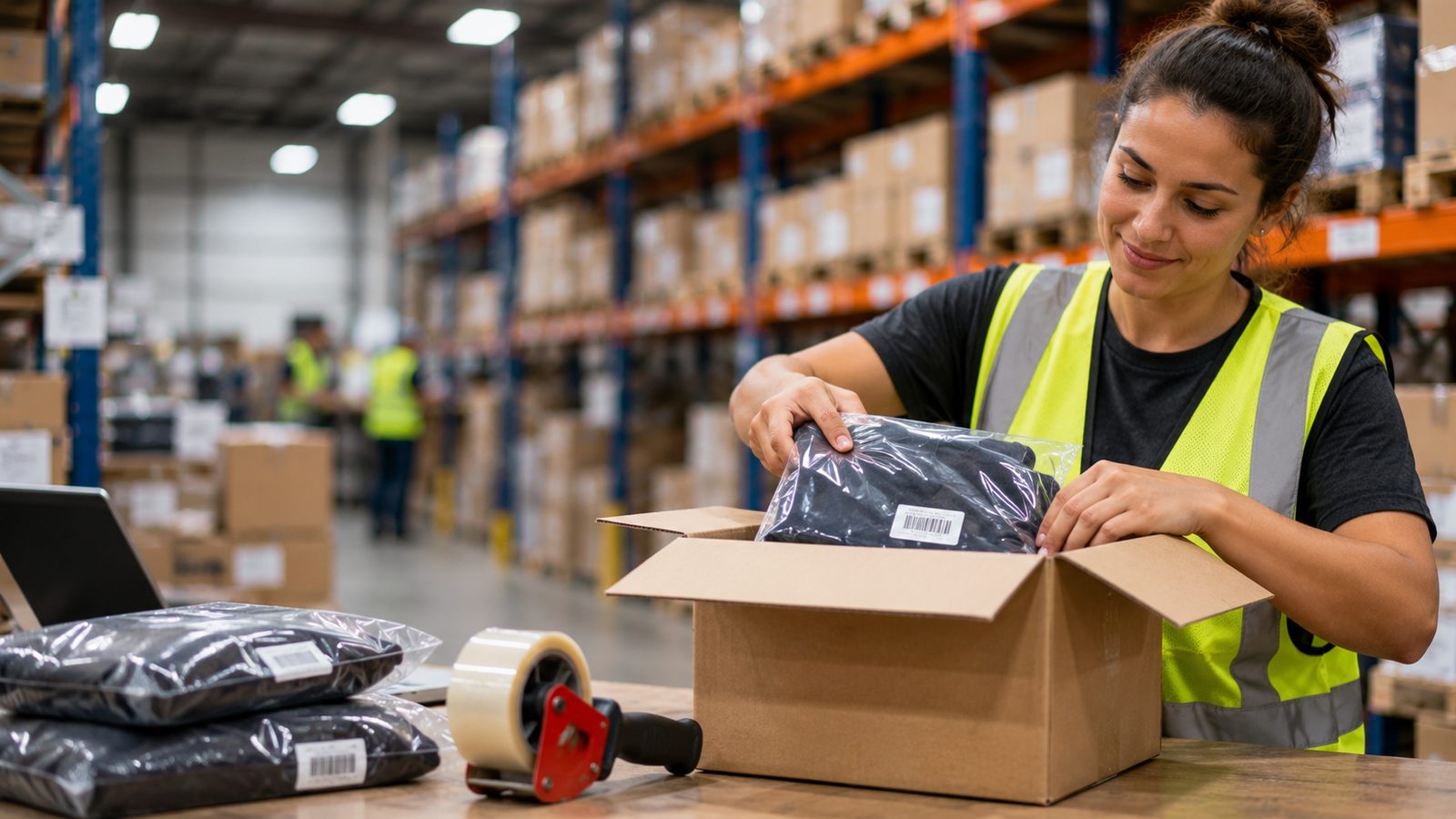
A 3PL is a third-party logistics company. They hold your stock, and they pack and ship your orders for you.
Ask a seller what it costs to ship an order and you will get one number: whatever the carrier charges to move the box. But it is not one number. In reality it is closer to eight:
- The carrier bill.
- The monthly storage fees.
- The pick and pack fee on every order.
- The box, the filler and the label.
- The surcharges.
- Residential delivery fees.
- Fuel levies.
- Oversized box charges. And the list goes on.
Every one of those has its own rate. And every one of them is something you could argue about. But you never do.
Two fees that look related, but are not
- Amazon’s referral fee is a channel fee, not an outbound shipping cost. See the channel fees lever.
- The freight that brought your stock in from the supplier is part of your landed product cost.
This lever is only about getting the order out from your warehouse to the customer.
When you record outbound shipping correctly, it does two things for you. It shows you what it really costs to get one order out the door and to your customer. And it lets you track changes over time. Every dollar you save improves your contribution.
2. Why it matters so much
This is usually the cost sellers underestimate the most. The carrier bill is often only half of what it actually costs you to fulfil an order. The other half is sitting in charges you have never read.
The good news is that most sellers can take 5 to 15% off what it costs to get an order out the door. You do not need one big negotiation to get there. The savings come from a lot of small audits. And once you capture them, they repeat on every single order from then on. For example:
- Up to a third off the shipping on orders that were going out in a box that was too big. See Use the Right Size Box.
- 1 to 3% back from checking the small fees on your warehouse bill.
- Up to 30% off the shipping on orders where items that sell together go in one box.
None of those are dramatic on their own. But stack them together and the change in your contribution can be significant.
3. Where to find the number
You need your income statement, also called the profit and loss statement. That is where the real cost is found. And it should trace back to the actual invoices: from the carrier, from your 3PL, and from your packaging supplier.
Which brings us to the timing problem, and this one catches almost everybody. The customer pays you for shipping today. The bills turn up much later. Your 3PL bills monthly. The carrier bills weekly and gives you thirty days. Packaging is a different supplier again. So the money comes in one month and the cost lands in another. Your shipping looks profitable one month and terrible the next, and all that changed was which invoices arrived.
What you charged for shipping and what it cost you have to sit in the same month.
And if it is not, you have a problem
If your shipping cost is wrong, your contribution is wrong. You will keep shipping products that cost more to deliver than they earn, and never know it.
4. How to measure it
- Open your accounting software. Xero or QuickBooks. Find the Income Statement, also called the Profit and Loss (P&L).
- Find outbound shipping and fulfilment. This is the important bit: it should not be one line. Each part needs its own line. The carrier. The storage. The pick and pack. The packaging. The surcharges.
- Show each sales channel separately. Amazon. Shopify. Walmart. TikTok Shop. If it is lumped in with something else, you can never pull it apart again.
- Compare 3 to 6 months. Set the report up so it shows at least three to six months side by side.
- Export it to Excel. Then do the calculation below.
What it needs to look like
Illustrative month for one store selling on Shopify and Amazon. Your line names may differ. The layout is what matters.
| Income statement line | Shopify | Amazon |
|---|---|---|
| Carrier postage | -$5,200 | – |
| Storage | -$1,100 | -$700 |
| Pick and pack | -$2,300 | – |
| Amazon fulfilment (FBA) fees | – | -$6,900 |
| Packaging | -$900 | – |
| Surcharges and fuel levies | -$600 | – |
| Total outbound shipping and 3PL | -$10,100 | -$7,600 |
| Net revenue | $65,500 | $46,000 |
| Shipping and 3PL lever | 15.4% | 16.5% |
Then the calculation itself
Create a formula in Excel. Take the shipping and fulfilment costs for one channel, and divide them by the net revenue for that same channel. That channel, not your whole business. What it costs to fulfil an Amazon order has nothing to do with what you sold on Shopify. A single blended shipping number hides that completely.
Shipping and 3PL profit lever
Outbound shipping and 3PL fees ÷ Net revenue
Net revenue = Gross revenue + Shipping income - Discounts - Refunds. Work it out per channel.
Why track it as a percentage, not dollars?
Your dollar amount goes up and down with your sales volume. So a bigger number might just mean you had a good month. The percentage takes the volume out. It shows you whether it is actually getting more expensive to fulfil an order.
And watch the parts, not just the total. If one fee, like the cost of handling returns, has grown by half, you want to see that on its own line.
5. What to do next
Now you know what it really costs you to get an order out the door. Go to the Shipping and 3PL Plays in the Profit Playbook and pick a play you would like to try. There are six of them. Make the change, give it a month, then run the same exercise to see if the play worked.
And one last thing. Open your own income statement and look for this:
- If shipping is one single line, ask your accountant to break it into its parts.
- If it is not split by sales channel, ask them to do that too.
- If your Amazon fulfilment fees are sitting with your Amazon seller fees, ask them to move them here. They are a shipping cost.
If they cannot do that, come and talk to us. That is the part we can fix for you.
6. Quick reference: what to avoid and what to apply
What to avoid
- Treating the carrier bill as your whole shipping cost.
- Keeping shipping and 3PL fees on one single line.
- Recording shipping costs in a different month from the shipping income.
- Leaving Amazon fulfilment fees inside Amazon seller fees.
- Mixing inbound freight into outbound shipping.
What to apply
- Give every part of fulfilment its own line, per sales channel.
- Match shipping costs to the month the shipping was charged.
- Divide outbound shipping and 3PL by net revenue, per channel.
- Watch each part as well as the total.
- Test one shipping play, then measure it after a month.
Can’t find these numbers in your books?
That is the part we can fix for you. CronosNow does accounting and bookkeeping for eCommerce sellers, with every profit lever on its own line and split by sales channel. Or take our free 31-Point Profit Diagnostic and see where your profit is leaking.
Definitions & modeling notes
Definitions
- Contribution
- What is left of a sale after all six variable costs are paid. It pays your fixed costs. Whatever remains after that is profit.
- Third-party logistics (3PL)
- A company that holds your stock and picks, packs and ships your orders.
- Outbound shipping and 3PL
- Everything it costs to get an order from your warehouse to the customer: carrier, storage, pick and pack, packaging and surcharges.
- Net revenue
- Gross revenue plus shipping income, minus discounts and refunds.
Modeling notes
- The income statement tables use one illustrative month for a store selling on Shopify (gross revenue $70,000, shipping income $3,000, discounts $4,000, refunds $3,500, net revenue $65,500) and Amazon (gross revenue $50,000, discounts $1,000, refunds $3,000, net revenue $46,000). Percentages are rounded to one decimal place.
- Shipping and 3PL lever: Shopify $10,100 ÷ $65,500 = 15.4%. Amazon $7,600 ÷ $46,000 = 16.5%. Amazon FBA fees are shown here, not with channel fees.